年年歳歳花相似 歳歳年年人不同
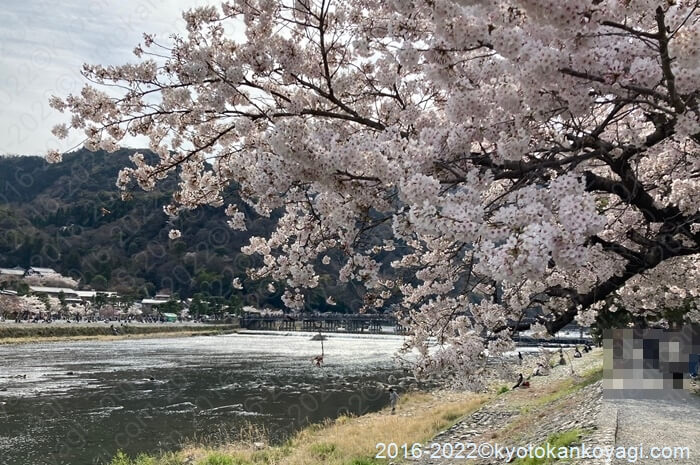
In accordance with Sankan Shion (三寒四温 A week has three cold days and four warm days), we expect the upcoming spring in the air with a conviction that our lives come alive anew. In April, when a new fiscal year and semester commence, Somei Yoshinos, so called Sakura, are in full bloom. Hence, they conjures up precious memories.
Moreover, they remind the literate of the sentences of a poem composed by 劉 希夷 (Liu Ky? I’m not sure how the name pronounced in Chinese. In Japanese, it pronounced as “Ryu Ki i.”) in Tang dynasty.
They reads: 年年歳歳花相似 歳歳年年人不同
- Original: 年年歳歳花相似 歳歳年年人不同
- In Japanese: 年々歳々花相似たり 歳々年々人同じからず
- Pronounced in Japanese: Nen Nen Sai Sai Hana Ai Nitari Sai Sai Nen Nen Hito Onaji Karazu
They could be roughly translated as “Every year flowers bloom same but people are not the same.” They are also known as “Zen Words” that implies everything is changeable.
They are simple but very profound, especially the latter one. The former means that flowers bloom in the same way every year. It tells us a fact.
The latter says, “Every year, 人(Person or people. We can’t tell 人 means single or plural in this case. ) are not the same as the flowers. It is very ambiguous and prolific because we can’t be sure we are not the same or those who around us are no the same, or other. The understanding depends on the lives we lead.

Every spring, I always remember these sentences being at a loss for the answer under the full-bloomed Somei Yoshinos.
I assume Sakuras are popular for something aesthetic but we don’t admire them only for instagrammable stimulations.
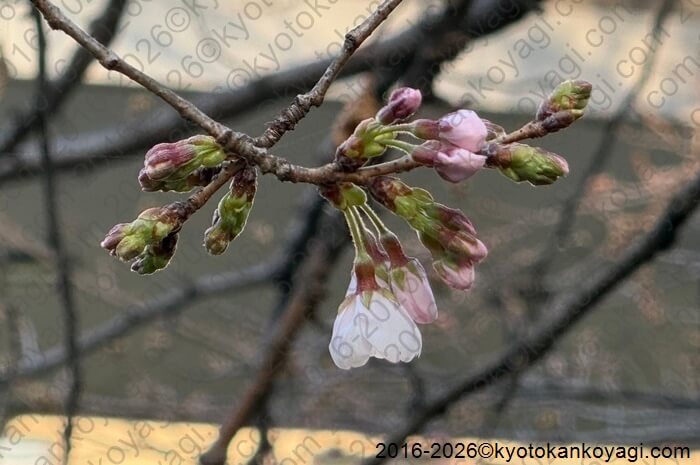
Fortunately, Somei Yoshinos has just stared blooming this year. Let us contemplate what they mean. I suppose it is “the authentic way” to enjoy Sakuras. 合掌

Not in Japan? Don’t worry. Visit Kiyomizudera virtually and enjoy the Sakura.