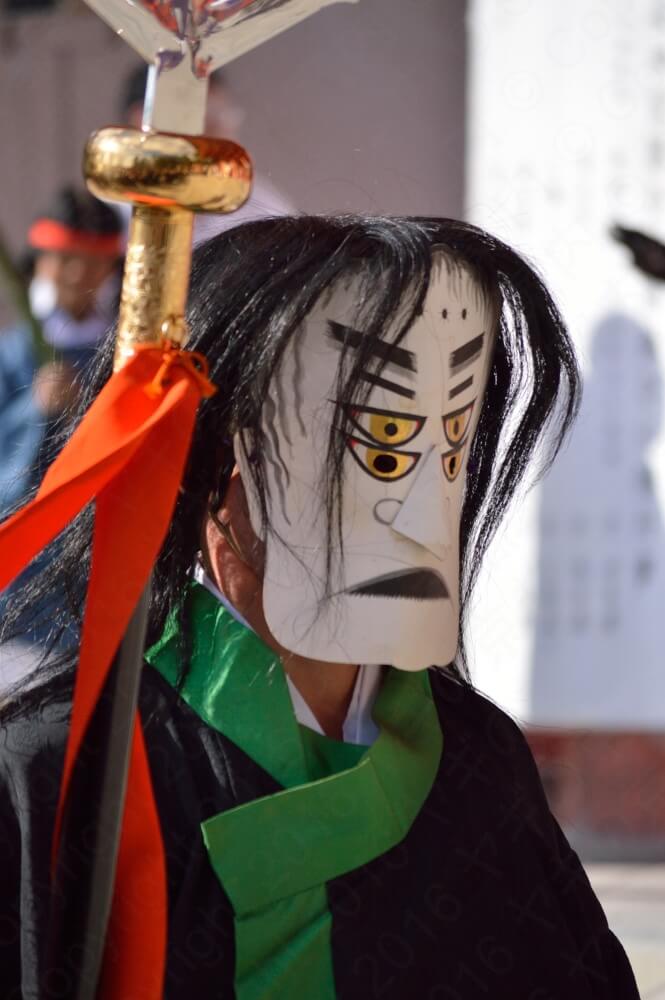
Introduction
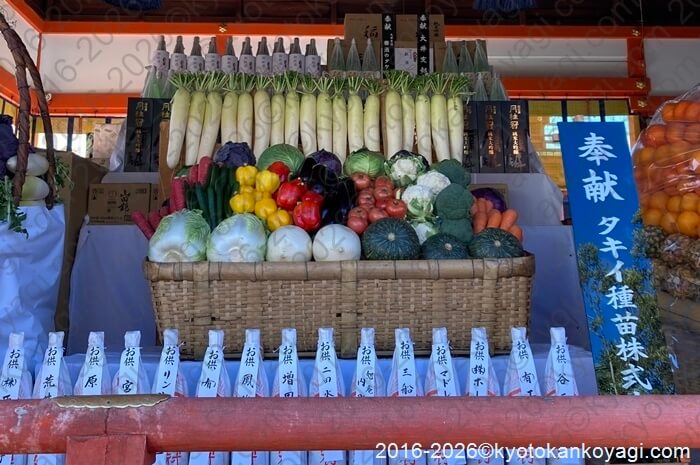
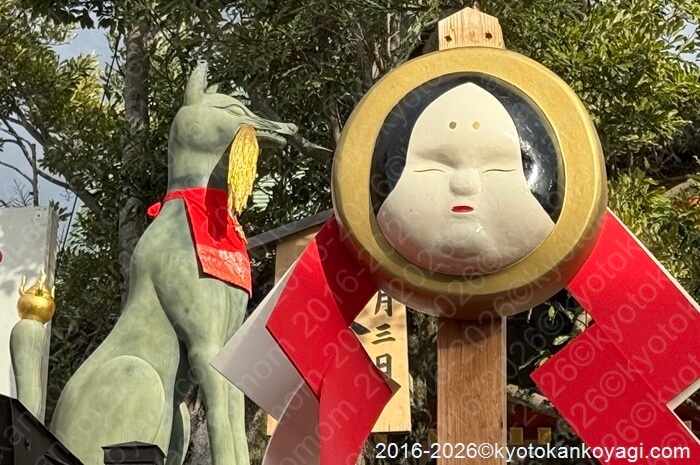
Hatsuuma is the first day of Uma in Kisaragi. Uma is Eto, the way to describe days and Kisaragi is February in the Japanese lunar calendar. On the day, Fushimi Inari Taisha, the head shrine of Inari shrines holds Hatsu Uma Taisai ritual in order to celebrate its foundation. We call it “Hatsu Uma Mode,” or “Fukumairi” and pay a visit to the shrine to ask the Inari Okami, the deities enshrined there, for our prosperity and commemorate the day the deities descended to Mt. Inari.
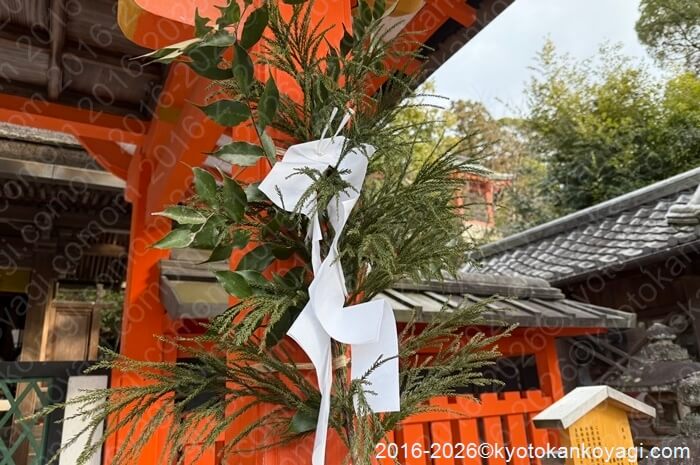
The day before the ritual, the main hall and sub-shrines are ornamented with “Aoyama Kazari,” the amulet made of the leaves of the trees grew in the mountain.
In this post, I’ll show you what Hatsu Uma Taisai is. 合掌
- Date・・・2/1/2026
- Starts at・・・8:00~

Fushimi Inari is ready for Hatsu Uma Taisai.
What is Hatsu Uma? 初午とは
Uma(Horse) is one of Eto that describe days. Eto is an abbreviated “Jikkan Jyunishi.” These days, we usually use Eto only when mention a year but also use it on days in special occasions.
Jikkan Jyunishi? Check this out.
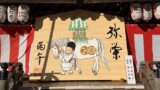
Why なぜ2月の初午にお祭りが行われるのか
Inari no Ohkami, the deities of Fushimi Inari descended to Mt Inari, the Kannabi Yama of it, on the first day of Ume in 711.

Kannnabi Yama is a mountain deity stays.
Shaku Nihongi (『釈日本紀』), cites the lost witing of Yamashino no Kuni Fudoki(『山背国風土記』), the records of Yamashiro (the place known as Kyoto today) puts it:
”風土記に曰はく、伊奈利と稱ふは、秦中家忌寸(はたのなかつへのいみき)等が遠つ祖、伊侶具の秦公、稻粱を積みて富み裕ひき。乃ち、餅を用ちて的と為ししかば、白き鳥と化成りて飛び翔りて山の峯に居り、伊禰奈利生ひき。遂に社の名と為しき。其の苗裔に至り、先の過ちを悔いて、社の木を抜じて、家に殖ゑて祷み祭りき。今、其の木を殖ゑて蘇きば福を得、其の木を殖ゑて枯れば福あらず。”
The Gist.
- Hara no Iroko, the ancestor of the Hata clan, was extraordinary prosperous man.
- He was so arrogant to shot an arrow to a rice cake. The rice became a swan and flew away.
- She landed on the top of Mt. Inari and gave birth to a child. The child implies a rice plant. Due to this incident, the Hatas enshrined Inari no Ohkami. The shrine is named after the rice plant.
- The descendants of Hara no Iroko were ashamed of his deeds and brought the cedar trees in the mountain to their home.
Each number implies:
#1 Sorei Shinko, the faith on ancestors, #2 the faith of grain, #3 Inari no Ohkami is a deity of grain, and #4 Shirushi no Sugi of Hatsu Uma Taisai.
the lost witing of Yamashino no Kuni Fudoki doesn’t mention when Fushimi Inari was founded but the reliable sources like Nijyunisya Chyushiki (『二十二社註式』), the descriptions of important 22 shrines in the 11th century, says Fushimi Inari was founded on 711.
Inari no Ohokami means a collective deities. The most important one is Uka no Mitama no Kami (宇迦之御魂神). Uka is a deformation of Uke that stood for food in old days. She is known as a deity of food, especially rice.
About 1,000 years ago, people climbed 7 times on the day.
Climbing the mountain is equivalent to visiting a shrine because both of them are places where deity stays.
In the pillow book, the famous collection of essays in 1,002, Seisho Nagon, the author, tells us a story of a woman she met in Hatsuuma Taisai. The woman put it: 「まろは七度まうでし侍るぞ。三度はまうでぬ。いま四度はことにもあらず。まだ未に下向しぬべし」
Today, I climb the mountain 7 times. I’ve already done it 3 times. 4 more times? Piece of cake!
Even today, we climb the mountain as she did: Oyama Meguri. It takes about 1 hour.
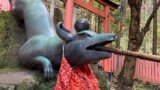
Shirushi no Sugi しるしの杉
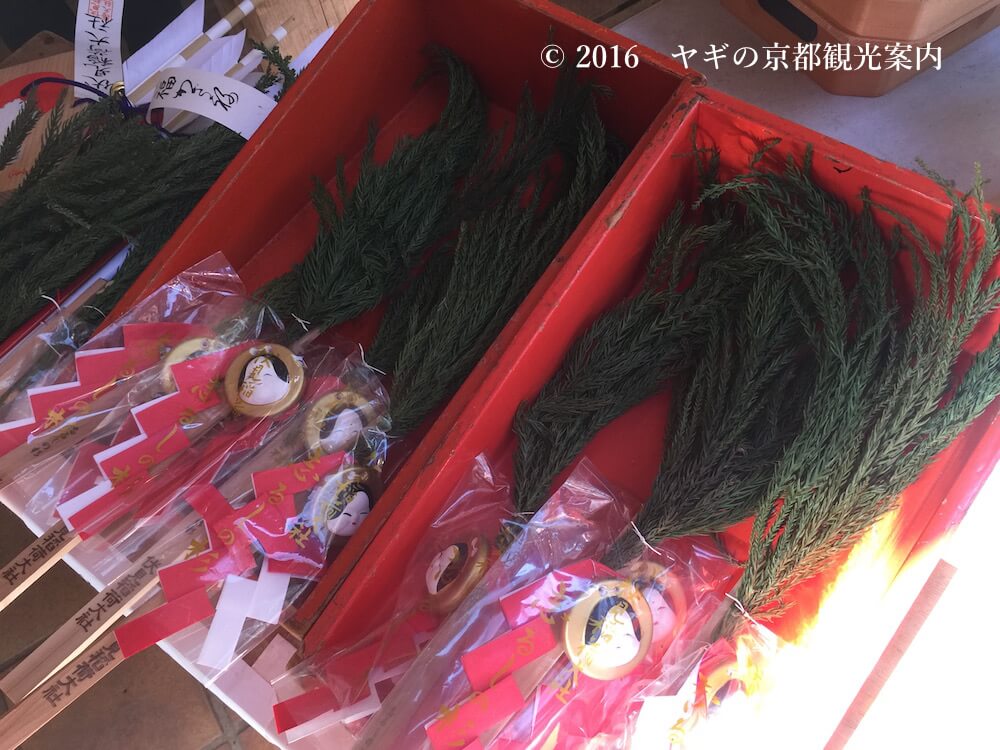
Sirusni no Sugi is an amulet we can have in Hasu Uma Taisai. This is base on the story in the lost witing of Yamashino no Kuni Fudoki.
”風土記に曰はく、伊奈利と稱ふは、秦中家忌寸(はたのなかつへのいみき)等が遠つ祖、伊侶具の秦公、稻粱を積みて富み裕ひき。乃ち、餅を用ちて的と為ししかば、白き鳥と化成りて飛び翔りて山の峯に居り、伊禰奈利生ひき。遂に社の名と為しき。其の苗裔に至り、先の過ちを悔いて、社の木を抜じて、家に殖ゑて祷み祭りき。今、其の木を殖ゑて蘇きば福を得、其の木を殖ゑて枯れば福あらず。”
The descendants of Hara no Iroko were ashamed of his deeds and brought the cedar trees in the mountain to their home. (Generally speaking,) If it grows up, it brings us a luck, and vice versa.
Shirushi no Sugi seemed to be popular. For instance, a famous poet wrote a poem in the 13th century:”きさらぎやけふ初午のしるしとて稲荷の杉はもとつ葉もなし”
In Hatsu Uma Taisai, I can’t find a single cedar leaves in Mt Inari because people brought them back to their homes.
In addtion to it, thanks to the story, the cedar leaves was accepted as amulets those days.
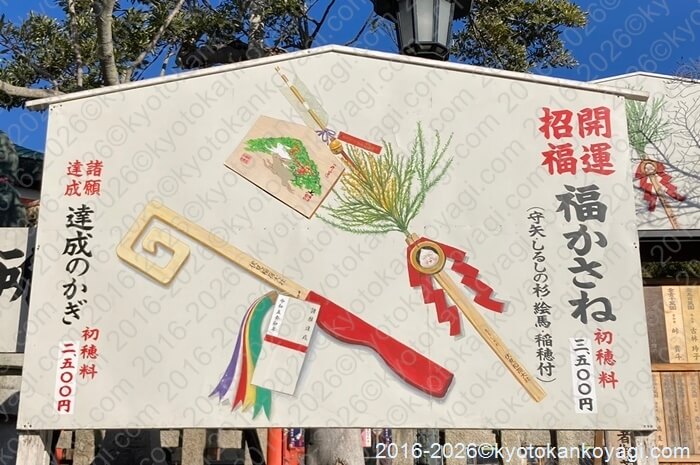
Today, we can buy other amulets like them.
Otsuka Taisai お塚大祭
On the same day, Otsuka Taisai riutla takes place in Gozendani Hohaijo. It used to be a place where priests prepared for food for the deities in Mt. Inari.
About Fushimi Inari Taisha
Access to Fushmi Inari Taisha
JR Line
Get off train at Inari station. Local line only.
Keihan Line
Get off train at Fushimi Inari station. Express, Local and Sub-express line only.
Check this out.
Bibliography 参考文献
- 山折哲雄/編(1999)『稲荷信仰事典』戎光祥出版
- 三好和義(2003)『伏見稲荷大社』淡交社
- 中村陽/監修(2009)『稲荷大神』戎光祥出版