Introduction 概説
On February 3, we cerebrate Setsubun in order to chase away Oni, the evil spirits, and welcome a new season. In Setsubun, we throw roasted beans and decorate the entrance of our home with an ornament of sardine. In this post, I’ll show you what this custom is. 合掌
What is Setsubun? 節分とは何か?
In the old solar calendar, Setsubun (節分) is the last day of each season. Accordingly, there are four Setsubun in a year but the word usually means the last day of winter. Next day is Rishyun (立春) and spring begins. Why do we focus only on spring? I suppose there are many reasons but I’m sure we convict everything comes alive in the season.
In the old days, we thought Jyaki (邪気) made us suffer around a new season. It is usually translated as “evil spirits” harm to us.
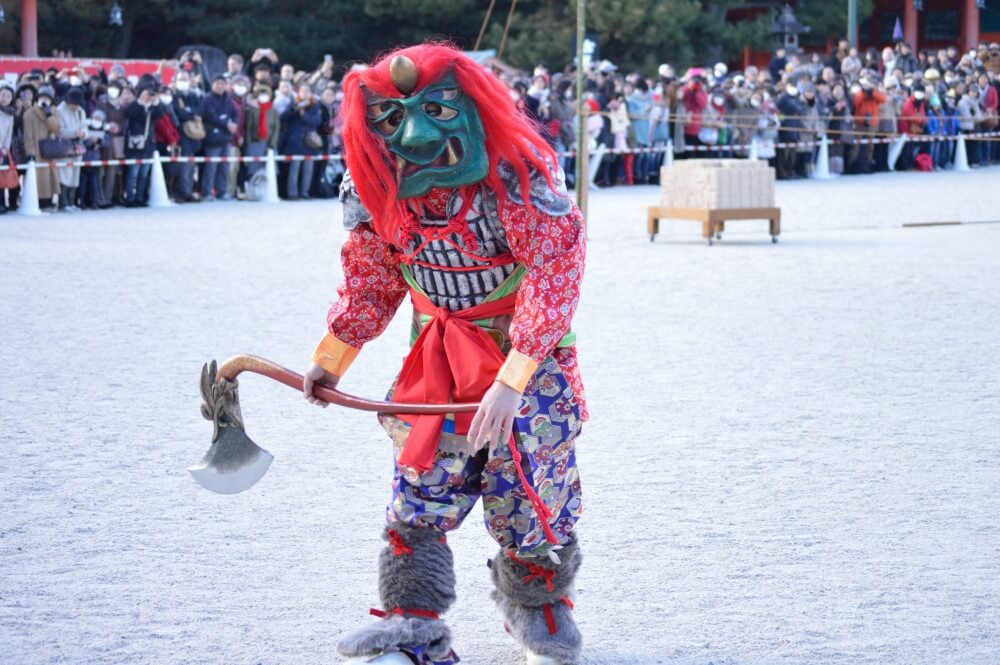
Jyaki was invisible and ancient people considered it as Oni (鬼). Oni is one of Yokai, the supernatural spirits or creature found in Japanese folklore.
In a nutshell, in Setsubun, we chase Oni for the sake of doing away with Oni (Jyaki) and welcoming spring.
Setsubun started as a ritual of the Imperial Court and we adopted it as a private custom, incorporating Tsuina (追儺).
Tsuina 追儺
Tsuina is also one of rituals of the Imperial Court. In 705, it is commenced in order to remove Oni as a cause of epidemics. On the new year’s eve, Hososhi (方相氏) and government officials chase the invisible Oni out from the Imperial Court.
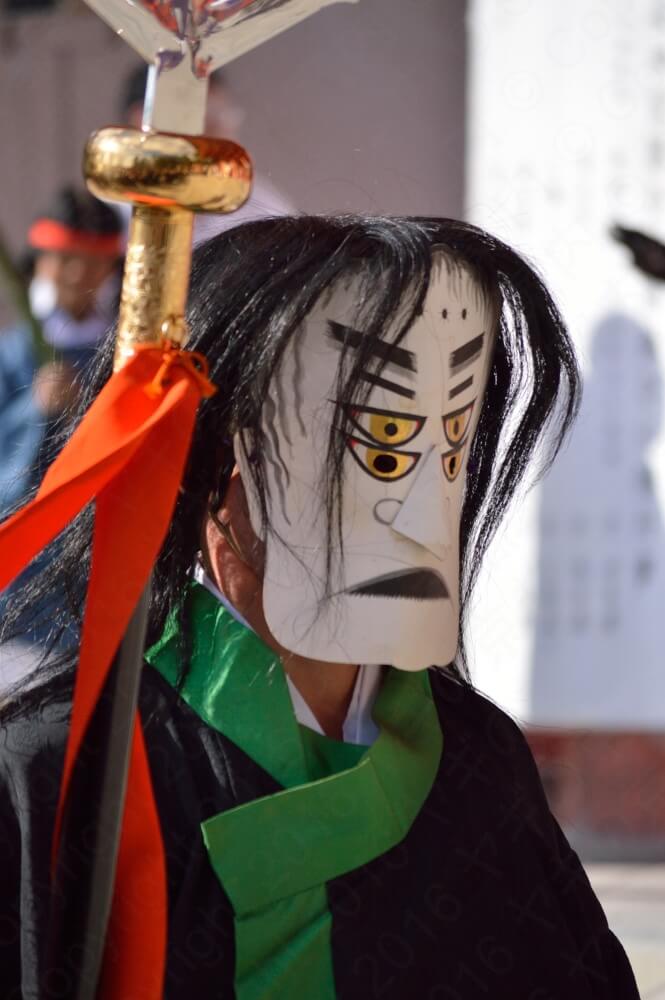
Hososhi plays the most important role. He has a fierce appearance enough to make Oni frightened.
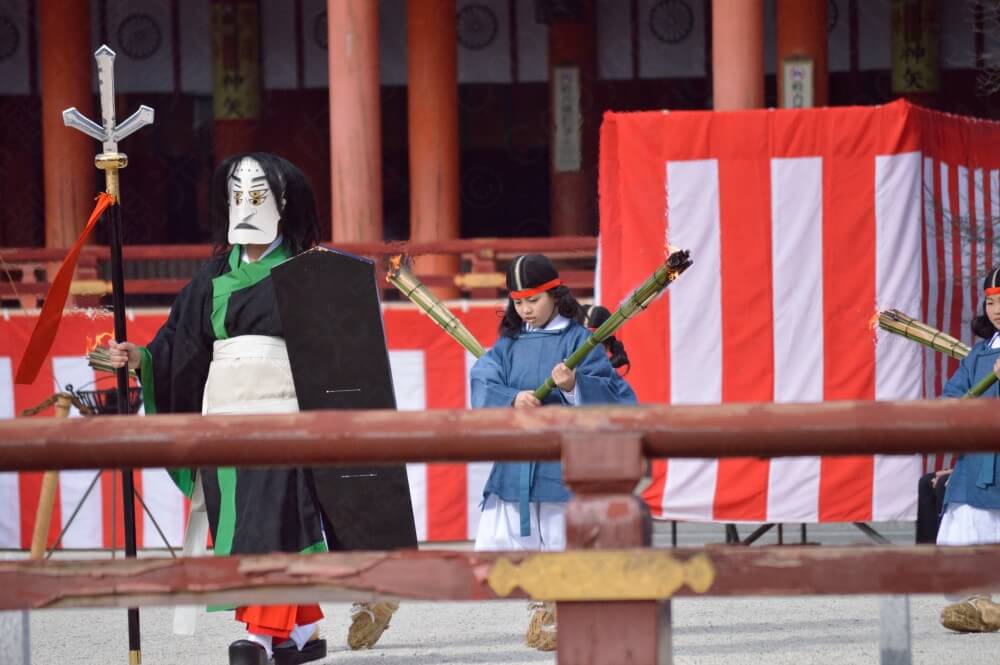
First, he hits them each other three times.
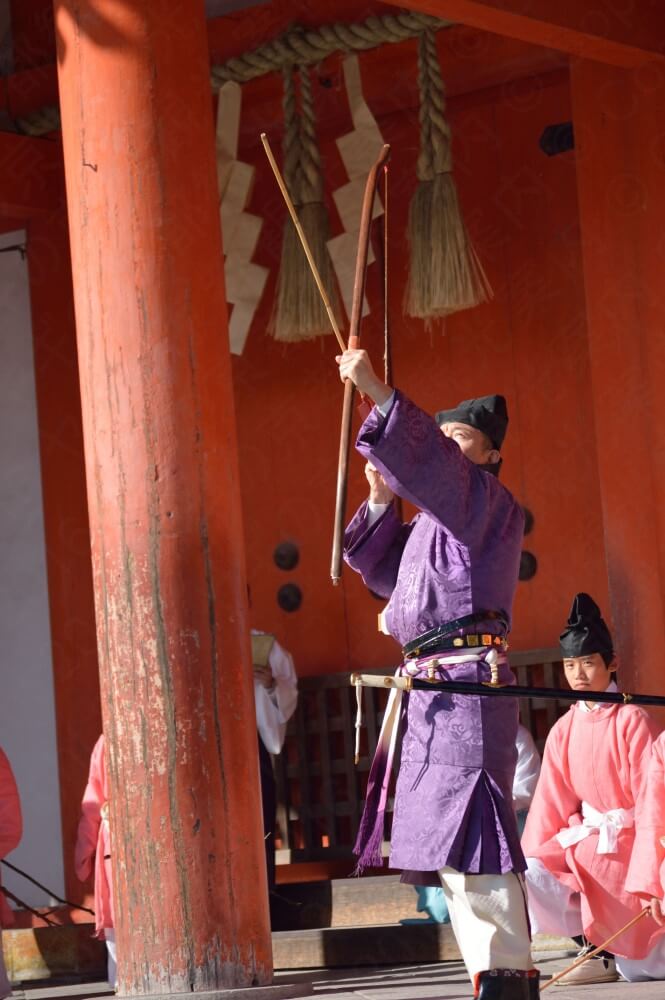
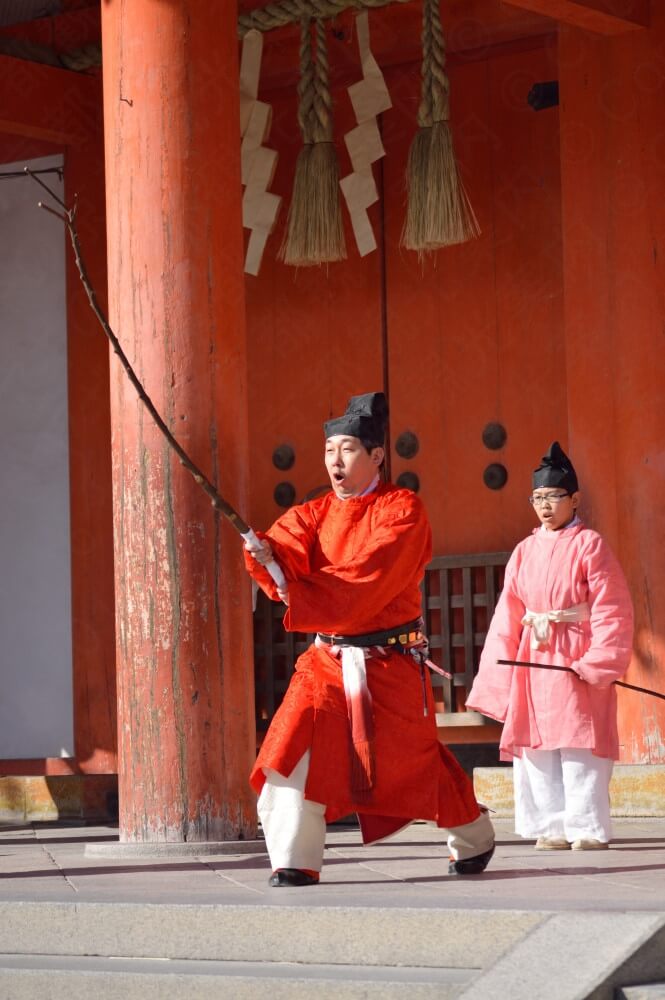
Then, one of the official shoots arrows and the other swings a stick. Tsuina is completed.
This is the authentic Tsuina. Fortunately, we can admire it in Daina no Gi in Heian Jingu shrine.
And as time went by, due to his appearance, Hososhi became Oni to be drove away.
Why roasted beans? なぜ大豆?

In Tsuina, Hososhi and his colleagues used arms to drive away Oni but we take advantage of roasted beans: We scatter them shouting, “Fuku wa Uchi, Oni wa Soto (Good luck in, Oni out)!” And after that, we eat as the same quantity of them as our age.
It depends on Kokurei Shinko (穀霊信仰), the faith of grains. In this faith, we believe grains have a sacred power as sources of life. It is important faith. For instance, Fuhimi Inari is based on it.
And Aouma Soran shinji shows us a good example. The Shinme horse eats soy beans in order to remove Jyaki in front of the main hall of Kamigamo shrine.
Sardine ornament 柊鰯
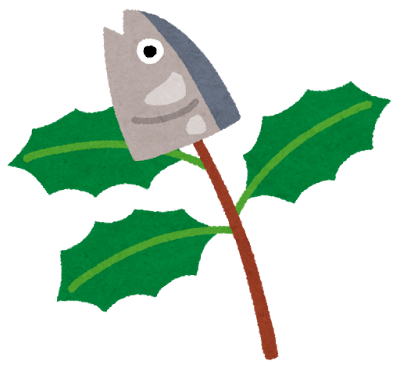
We decorate the entrance of our home with Hiiragi Iwashi (柊鰯). It is a false holly bough stuck into a head of a sardine. We believe its odor keeps Oni away from our house and the leaves sting Oni. And we usually sardines on the day.
Ehomaki? 恵方巻?
You may heard of Ehomaki. It is a Makizuhi. Some say eating it with facing a direction where Toshitokujin, the deity of the year, is in brings us good luck but it isn’t an authentic custom. I suppose some merchants invented the story.