Bamboo graffiti scars tells us everything could be a Buddha
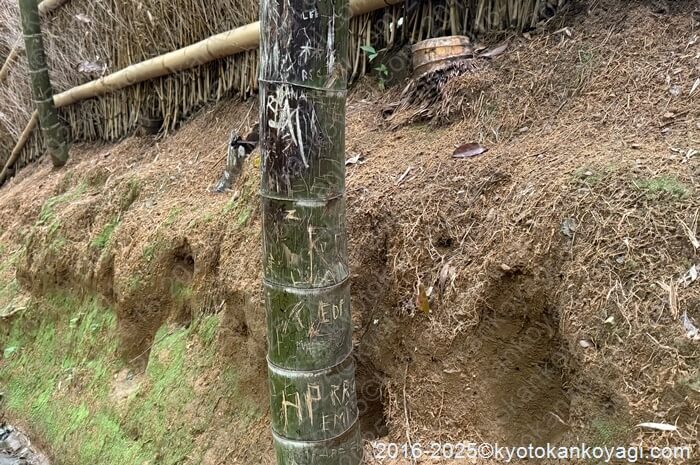
A video draw attention these days. In the video, a well-bred, highly-educated and cultured guy made graffiti scars on a bamboo in Mt. Inari of Fuhismi Inari Taisha shrine. Worst scenario, scarred bamboo will rot and we have no choice but to cut it down.
He is not the first one brave enough to show us we wouldn’t deserved to be alive if we could be ever gentle. Actually, similar cases reported many times in the shrine, Arashiyama, and other places.
We detest them not only they take the bamboos’ life away but they also violate what we inherited from our ancestors.
As is often the case, the origin of Fushimi Inari started as the faith of Kannnabi (神奈備). Our ancestors found Kami (Shinto deity) behind nature or natural phenomena and Kannabi is a place or thing where Kami stays. Mt. Inari gave people soil, water, and other several things for agriculture. They found a Kami who brought them prosperity in the mountain and held various rituals there.
In the 6th century, Buddhism brought them religious facility and Kami enshrined in Shrine. Fushimi Inari has enshrined Uka no Mitama no Kami (宇迦之御魂神), the deity of food and agriculture in the main hall for over 1,000 years and Mt. Inari still is a sacred place where Uka no Mitama and other Kamis stay and Shin Butsu Shugo (神仏習合), the fusion of Shinto and Buddhism is still alive and the bamboo is a part of it.
The sacredness of nature helped Japanese people to adopt a Buddhist teaching called Shitsu Busho (悉有仏性). In this teaching, every single living one is equal and could be a Buddha, i.e., enlightened one or awakened one. All the living ones, including rivers, flowers, animals, and so on. This is a foundation behind our way of thinking and norms and we despise those who make them ceased to exist. 合掌