What is Tsukimi?
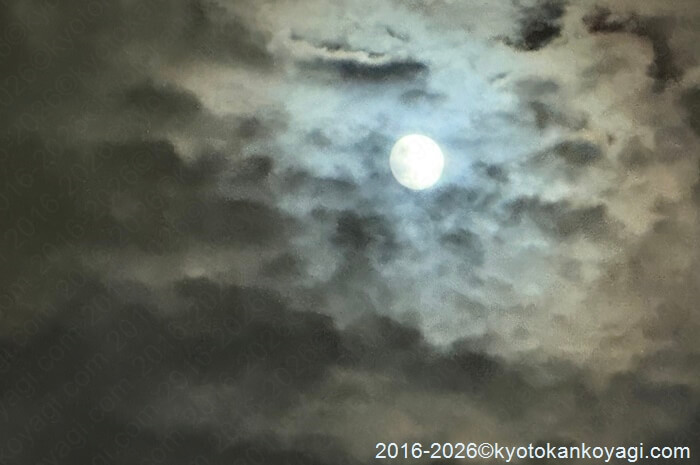
As the old saying goes, “春は花、秋は月(The best thing to admire: Sakura in spring and the moon in fall ),” we love to admirer the moon in fall.
In late September, we feel fall in the heat of the air, expecting Tsukimi (月見 Moon viewing) for Chushu no Meigetsu (中秋の名月).
Chushu no Meigetsu is the full moon in August in the Japanese lunar calendar. We have Syosu (初秋), Chushu (中秋), and Banshyu (晩秋). We prefer the moon of Chushu as the loveliest one to be seen: The height of the moon is perfect and the crisp and clear air helps us to admire it.
I suppose “the crisp and clear air helps us to admire the moon” is one of the aesthetic sense indigenous to our country. It could be hard to understand that but it is quite natural for us.
The moon appears as it is and infinite as if the doors of perception was clensed.
In old days, of course even today, rituals, ceremonies, and parties took place and people love to compose poems.
An anonymous poet wrote, “月々に月見る月は多けれど月見る月はこの月の月(The best month to admire the moon is one in August though we can see it in every months .”
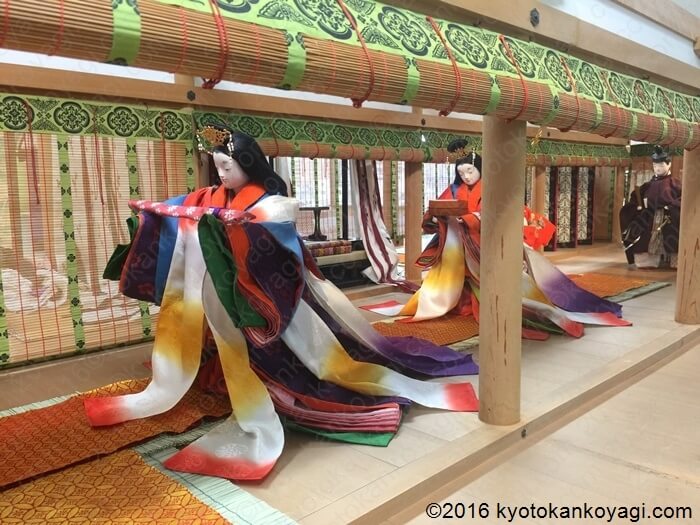
The court nobles imported this custom from ancient China and commoners adopted it later. For peasants, fall is a season of cultivating and they did Tsukimi prior to Matsuris to show gratitude for Shinto and Buddhist deities in fall.
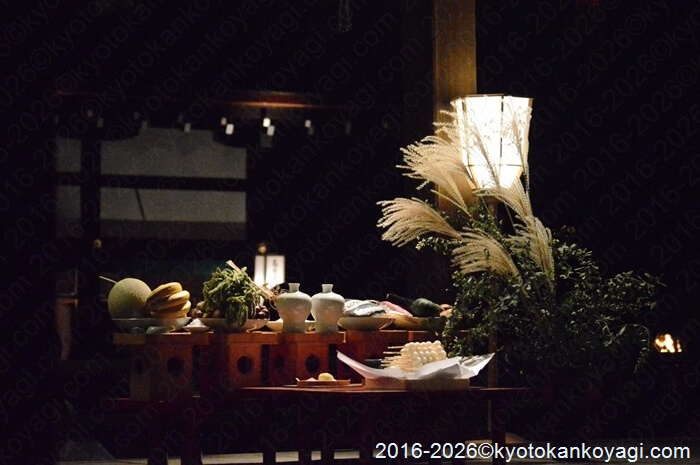
Generally speaking, we offer the crops harvested in fall to them and the moon: Dangos (rice dumpling), Susuki plants, potatoes, edamames (young soy beans), chestnuts, persimmons, and so on.
Kangetsu-e in Daikakuji temple
The most fascinating Tsukimi is Kangetsu-e (観月会) in Daikakuji temple.
Daikakuji is a Buddhist temple of Shingon school and former villa of Emperor Saga (786-842). The villa has a pond called Osawa no Ike(大沢池), the oldest artificial pond in Japan. Kangetsu-e is a ritual for Gatten (月天), a guardian of Buddhism.
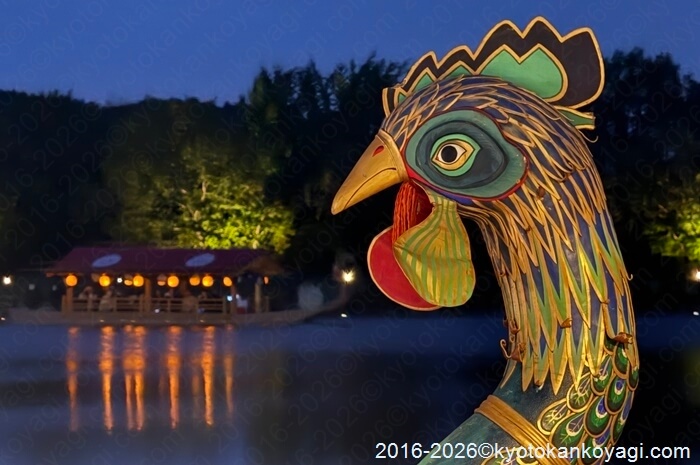
In old days, emperors and court nobles enjoyed Funa Asobi (船遊) on Ryuto sen (龍頭船) and Gekisu sen (鷁首船) boat to enjoy landscapes in every season.

For instance, Kinkakuji and its pond was designated for Funa Ashobi.
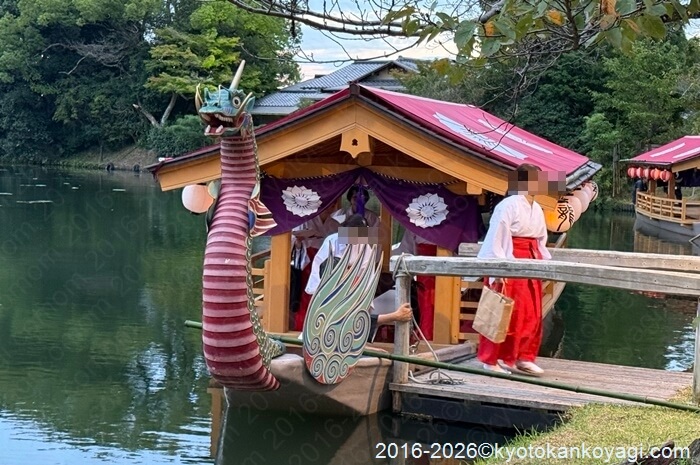
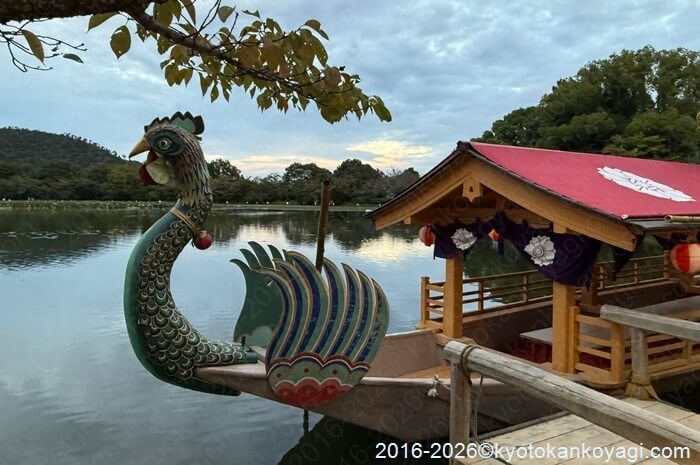
Ryuto sen has a dragon and Gekisu sen has a geki as a figurehead individually. Dragon is a deity of water and geki is an imaginary bird saves us from water-related accident. In the days of old, they enjoyed music and landscape.
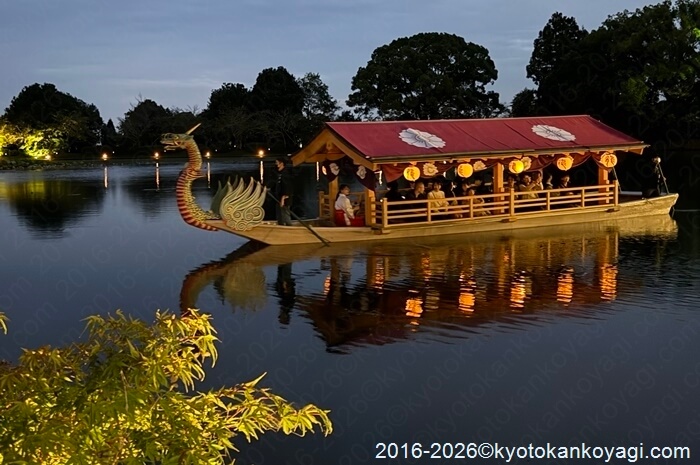
Some experts say Emperor Saga created the pond to admire the Chushu no Meigetsu. Today, we can enjoy Chushu no Meigetsu in the same way.
In 2026, 9/25 was Chushu no Meigetsu. It was cloudy but when ritual commenced, the full moon appeared through the cloud. Enjoy it as the emperor did over 1,100 years ago. 合掌