What is Kotodama? 言霊とは?
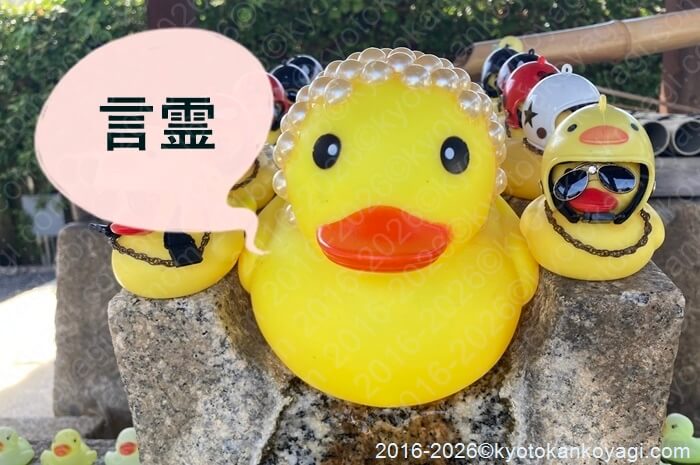
Kotodama (言霊) is Miatama (Spirit) is the mystical power of words.
言 is an abbreviated “word” and 霊 is spirit or soul. It is often said that there are thousands of Kami (deities) in Japan. The basic ones are found behind nature and natural phenomena and we see them behind numerous things including words.
In this belief, our way of thinking and behavior depends on Mitama in each word we speak whether they are good or evil. For good thing, use good words, vice versa.
Once Eduardo Mallea says,”Each man’s destiny is personal only insofar as it may resemble what is already in his memory.” The sentence could help you to understand this conviction.
The instances 実例
Mythology and Norito 神話と祝詞
I’m sure words made a foundation of every culture and our ancestors emphasized the mystic power they have.
For instance, the Ukei of Amaterasu and Susanoh in Japanese mythology shows us the supernatural power we believe in. Ukei (誓約) is a kind of oracle. In the case of this story, the issue is the truthfulness of their words.
In addition to it, Norito (祝詞) plays an important role. Norito are words we use when we communicate with Kami, especially in rituals. Even today, priests read out Norito in ritual and we also read it in our mind in front of Kami.

This is Norito in Aoi Matsuri. The sentences are different from the language we speak but we can understand what they mean owing to the Kanjis. (It is a note I took in an exhibition in a hurry. So, not in beautiful letters.)
Manyoshu 万葉集
The renowned example is a poem in Manyoshu, the oldest collection of Waka poem compiled in the 8th century. This compilation is one of the most important sources of our culture. For instance, the Japanese imperial period Reiwa was named after a poem in it.
The following is a poem composed by one of a prominent poets Kakinomono no Hiromaro (柿本人麻呂).
神代欲理 云伝久良久 虚見通 倭国者 皇神能 伊都久志吉国 言霊能 佐吉播布国等 加多利継 伊比都賀比計理 今世能 人母許等期等 目前尓 見在知在
It means:
As the legend goes, several Kami influence our country and words lead us to contentment. People understand and accept the idea without doubt.
Practical use 使つてみませう
We enjoy the fruits of Kotodama in daily conversation. I suppose the easiest example is “I love you” but I suppose that it is demanding to show you in other languages. Therefore, I’ll show you it taking advantage of a name of a shop in Kyoto.
In Shinkyogoku street, there is a souvenir shop called “Iwai.” In Kanji it is written as “井和井.” I have no idea about the reason of the name. May be there used to be a well (井 can indicate a well) or it is a surname of a founder.
The significant thing about the name is a sound. “井和井” is pronounced as “Iwai.” Iwai can be written as “祝い” which means “celebration.” The sound conjures up the word whether consciously or not. And “和” means harmony.
These affects my mind to make me come alive every time we pass by the shop with the help of the fragrance of the burned incense sticks near the entrance. (We burn incense sticks when we are in front of Butsudan, a place to be face to face with the deceased ancestors in household.)
Conversely, we keep in mind that we must avoid using “Imikotoba” that brings us something bad or evil. I don’t show you the examples of this because they bring you and me something not good.
Say “Something not good” in stead of “something bad,” Okay?
We are taught to prevent using Imikotoba in some occasions. For instance, we cannot say “leave” in a marriage ceremony because it implies “break up.” With the word, people think you are a person with no decency.

I’m sure your language is different from Japanese but if you find this post interesting, use words conjure up something good. I hope you, your family, friends, and the ones you love are happy. 合掌