What is 🎏?
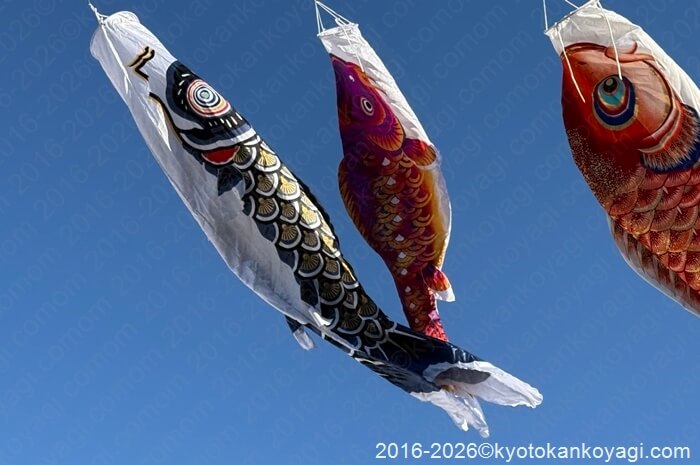
I heard we can use 🎏 on every single iPhone. The Emoji stands for Koinobori or “Carp Streamer,” the carp-shaped wind cones flown on the day of Tango no Sekku.
Sekku are annual ceremonies held five times in a year. Tango no Sekku (端午の節句) is one of them takes place on May 5.
Tango no Sekku 端午の節句
Tango means “the first day of Uma (horse) of a month. In the traditional Japanese lunar calendar, May is a month of Uma (午). “午” and “五(five)” can be pronounced as “Go.” We call this “Ontsu (same pronounciation).” Due to this, our ancestors found 五月五日(May 5) was suitable for Tango no Sekku.
In a nutshell,
- Tango= 1st day of Uma month.
- Uma can be pronounced as “Go.”
- Five also can be pronounced as “Go.”
- 5/5 is suitable for Tango.
BAAH?
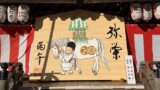
Horse in a calendar? Check this out.
This Sekku is imported from ancient China. In Jingchu Suishiji, a description of annual events of around 6th century, says, “May is horrible and there are many taboos. People ornamented their house gate with Shobu and Yomogi plants.”
Japan adopted this custom in the 8th century. Otomo no Yakamochi, the famous poet, described it in Manyo Shu, the compilation of Japanese Wakas:
- “かきつはた 衣に摺りつけ ますらおの 着襲ひ狩りする 月は来にけり”
- Pronunciation: Kakituhata Kinu ni Suritsuke Masurao no Kisoi Kari Suru Tsuki wa Kinikeri
- Meaning: The month has come. Men search for medical herbs with touching their sleeves to Kakitusbata flowers gently.

Manyo Shu is a source of Reiwa, the Imperial period. 2026 is Reiwa 8.
Seisho Nagon, one of the most influential court ladies, also reported it in The Pillow Book:
- “節は 五月にしくはなし 菖蒲、蓬などのかをりあひたる いみじうおかし”
- Pronunciation: Sechi wa Satsuki ni Shik wa Nashi Shobu Yomogi nado no Kaori Aitaru Imiju Okashi
- Meaning: The best Sekku is (the one held in) May. The fragrance of Shobu and Yomogi are extraordinay pleasant.
Shobu and Yomogi are medical herbs. People believed they get rid of Jyaki. Jyaki is usually translated as “evil sprits” that causes anything wrong. In Tango no Sekku, every single person, including emperor, ornamented their attire with these herbs.
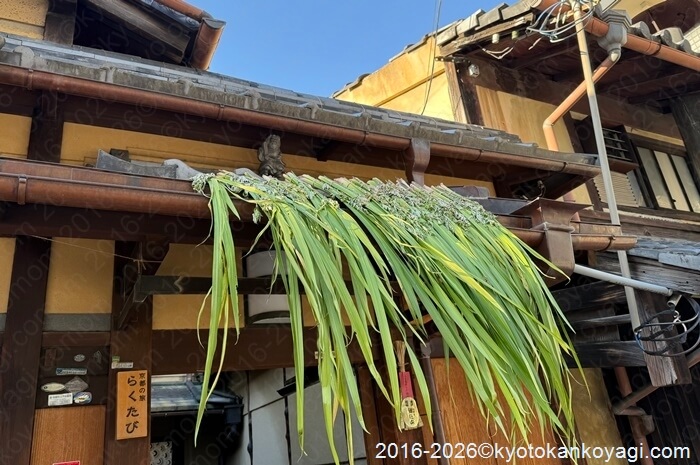
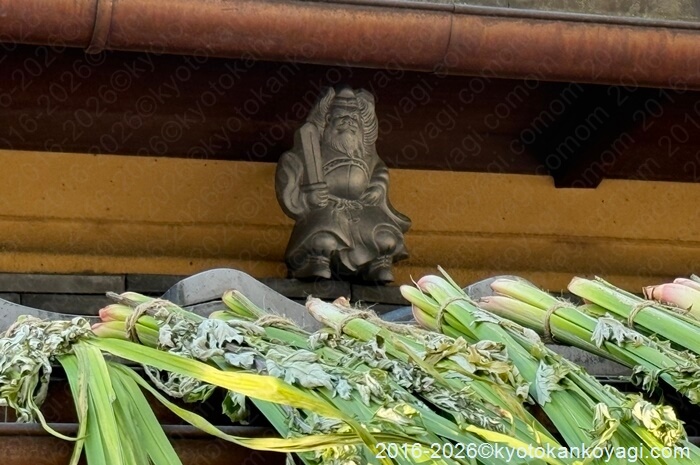
This custom is still alive. This is Noki Shobu ‘Shoubu on the roof. The long plans are Shobu and the short ones are Yomogi. Their scent prevent the evil spirits from entering the residence.
The may in the Japanese lunar calendar (we call it Satsuki) is June in the Gregorian calendar. In June, they prepared for Tsuyu(梅雨), the rainy and moldy season that brings them inconveniences like epidemics and maladies.
On the other hand, Taue(田植え) started in May (June today). In Taue, Saotomes (早乙女), the young unmarried girls, plant rice in paddies. They did Kessai (潔斎) around Satsuki 5 in order to prepare for Taue because Taue means not only rice-planting but also means serving for, or co-working with “Ta no kami (Deity of rice paddy).”
We find Kami in nature and natural phenomena. We not only co-work with the Deity but we also inherited the rice cultivating from Amaterasu Ohmikami. They didn’t prepare for it without Kessai.
In brief, Tango no Sekku is a fusion of getting rid of the evil and Kessai.
Established as a Sekku for Boys
In the 13th century, the Kamakura Shogunate was established and Samurais were overwhelming and they accelerated the importance of Shoubu(尚武), the self-restraint braveness. “尚武” and “菖蒲” are pronounced as “Shobu,” i.e., they are in “Ontsu (same pronounciation).” Owing to this, Tango no Sekku became a ceremony for Samurais’ sons, especially the eldest one.
Around the 18th century, commoners started to celebrate their son’s success with Koinobori on Tango no Sekku, relaying on the anecdote of Toryumon.
In the story, a carp became a dragon through the hardships. It also paved the way for Karesansui gardens. I assume the Rock garden of Ryoanji was not born without it.
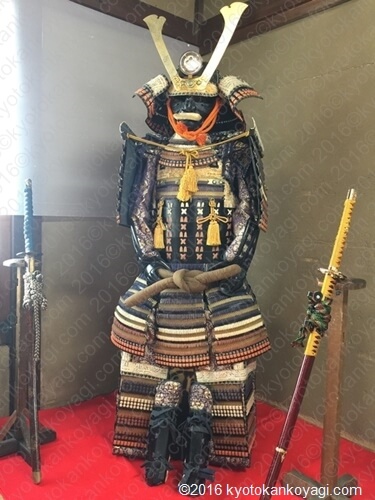
In addition to it, their admiration for Samurais made them display Musha figurine in their home. (The armor in the photo is not Musha figurine. It is one of Yumiyacho Bugu Kazari in Gion Matsuri.)
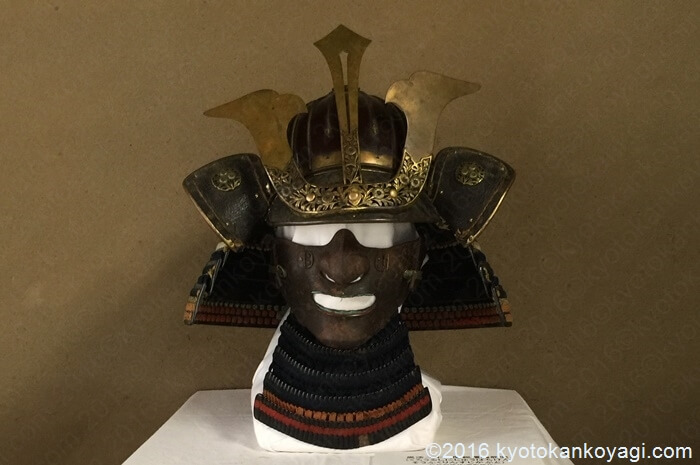
Kabuto (helmet) often replaces Musha figurine.
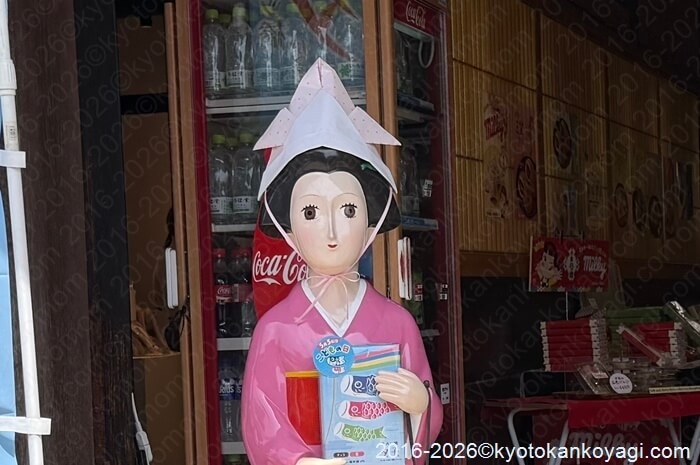
She wears a newspaper-Kabuto though we also have Hinamatsuri, the Sekku for girls.
Basic Koinobori
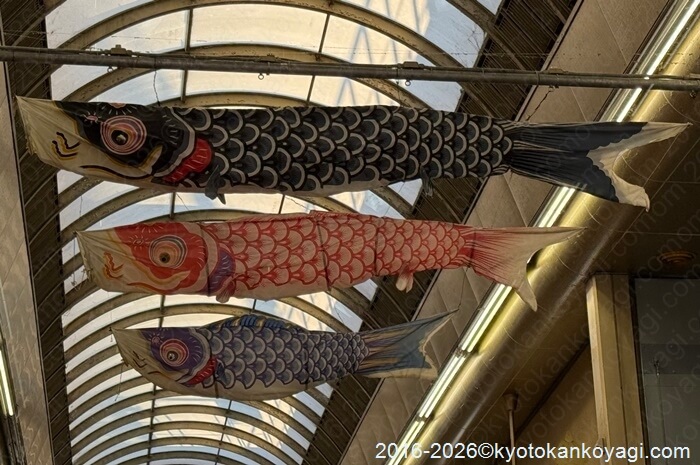
This is a typical string of Koinobori we can see today. At first, Koinobori meant a black one and a Nobori with a picture of Zhong Kui painted on.
Zhong Kui is a Taoist deity who saved Emperor Xuanzong of Tang’s life when he suffered from malaria. In Kyoto, we can find a figurine on the roof of a house. It works as a guradian.
From top:
- Black Carp: Father. Koinobori meant a black carp only originally.
- Red Carp: Mother. Added to Koinobori later.
- Blue Carp: Son. Added to Koinobori later.
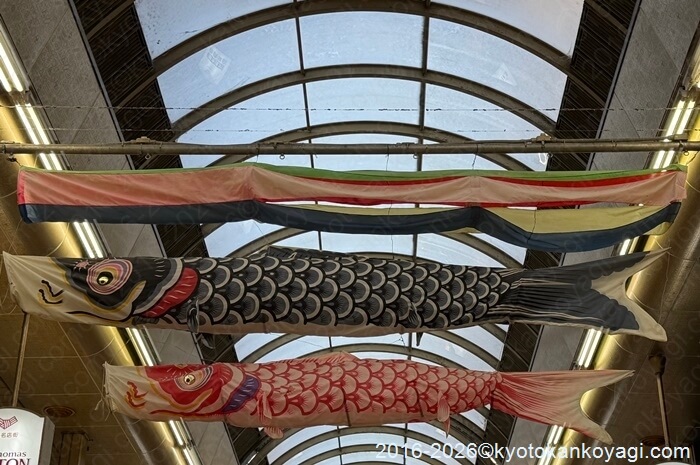
Over the Balack carp, a five colors Nobori usually added. They are painted in five colors of Inyo Gogyo theory.
Inyo Gogyo theory is divided into Inyo(陰陽) theory and Gogyo(五行) theory.
- Inyo(陰陽) theory means “Shady place and Sunny place.” It is a dualism of Yin(Shady) and Yang(Sunny). These elements interact each other.
- Gogyo(五行) is so-called “Five Elements Theory” in which every thing is made of 木(Wood)/火(Fire)/土(Earth)/金(Gold)/水(Water).
As a result, in Inyo Gogyo theory, everything depends on a balance of Yin and Yang and mutual peace or destruction of the five elements.